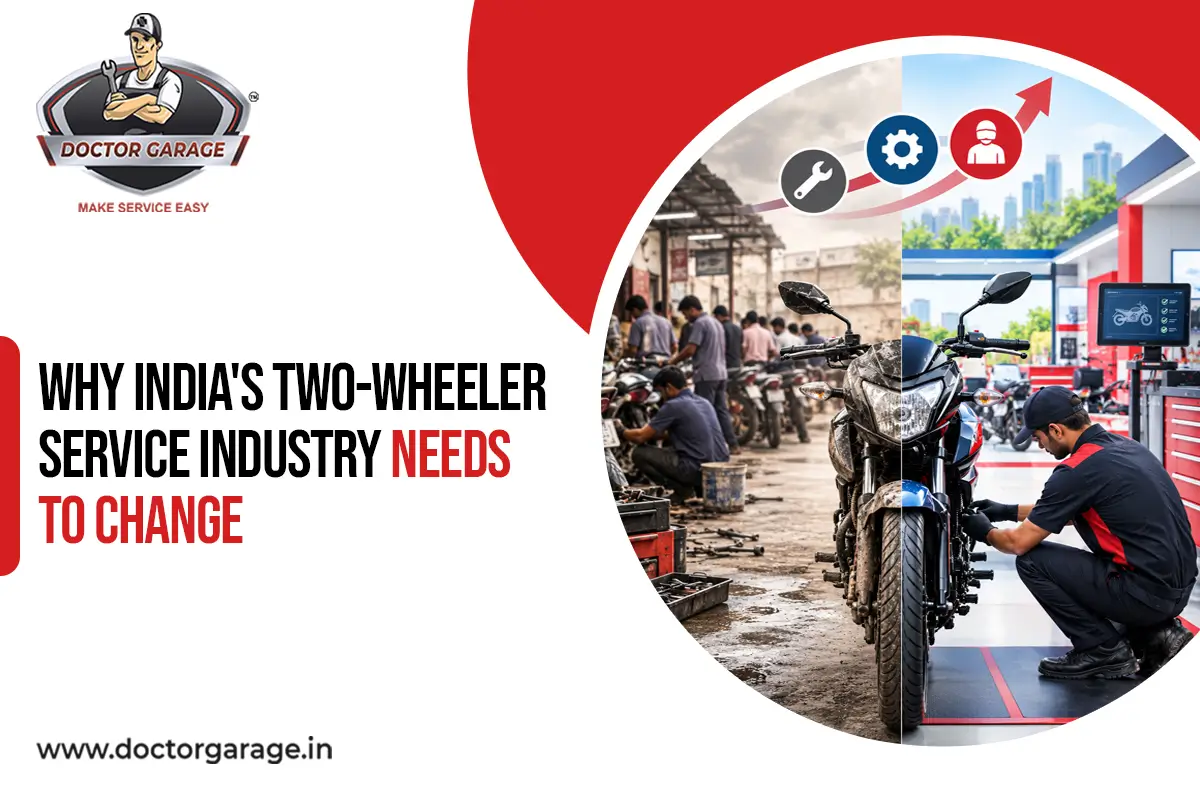
Your bike may be built for Indian roads, but is the way we service it keeping up with today’s riders? For millions of people in India, a two-wheeler is not just a vehicle. It is part of everyday life. People use their bikes and scooters to travel to work, attend college, run businesses, make deliveries and manage daily errands.
But when it comes to servicing, the experience is not always as smooth as it should be. Riders may face unclear pricing, delayed repairs, repeated problems or uncertainty about what actually needs to be replaced.
This becomes more important as two-wheelers become more advanced. Modern bikes have electronic fuel injection, sensors, electronic control units and, on many models, ABS and other electronic systems. These features need more than basic mechanical knowledge.
That is why two wheeler service in India needs to move towards better diagnosis, trained technicians, standard procedures and greater transparency.
The Bike Has Changed. Has the Garage Changed Too?
The technology used in today’s two-wheelers is very different from what was common a few decades ago.
Carburettors have largely been replaced by electronic fuel injection. Emission requirements have become stricter, while electronic sensors and ECUs are now part of everyday motorcycle technology. ABS is also available on many modern bikes.
As a result, servicing is no longer only about changing engine oil, cleaning parts or replacing worn components.
For example, if a bike has a throttle body problem, simply cleaning it may not always solve the issue. Depending on the model and the repair, calibration or relearning may also be required.
Similarly, an ABS warning light does not automatically mean that an expensive ABS component needs to be replaced. A diagnostic scan and proper inspection can help identify whether the problem is related to a wheel-speed sensor, wiring, connector or another component.
Modern ECUs can also store fault codes and other information. A technician who has the right diagnostic equipment can use this information to narrow down the actual problem instead of relying only on symptoms.
This is where the traditional bike repair service in India needs to evolve.
A workshop may have experienced mechanics, but experience alone is not always enough when vehicle technology keeps changing. Without the right tools and updated knowledge, diagnosis can become trial and error.
And when the wrong part is replaced, the customer pays for it without necessarily solving the original problem.
Why Proper Diagnosis Matters
One of the biggest changes needed in two-wheeler servicing is putting diagnosis before repair.
A rider may come to a workshop because the bike is difficult to start, the engine is running unevenly or a warning light has appeared on the dashboard. These symptoms can have more than one possible cause.
Replacing parts one by one is not an efficient way to find the problem.
A proper service process should start with an inspection and, where applicable, a diagnostic scan. The technician can then combine the scan results with physical checks and the rider’s description of the problem.
This approach can help:
- Identify faults more accurately
- Reduce unnecessary part replacement
- Save the rider’s time
- Avoid repeated visits for the same issue
- Make repair costs easier to explain
The goal is simple: find the reason behind the problem before deciding what needs to be replaced.
What Should a Modern Two-Wheeler Workshop Offer?
A professional workshop does not necessarily need to make servicing complicated. It needs to make the process organised and transparent.
Here are some of the basics that modern riders should expect.
1. Diagnosis Before Repair
The technician should first understand the problem. Diagnostic scanners, visual inspections and component testing can be used where required.
Parts should not be replaced simply because they appear to be a possible cause.
2. Standard Service Procedures
A proper checklist can help technicians avoid missing important service points.
Depending on the bike and service requirement, this may include checking fluids, brakes, tyre condition, chain condition, battery, lights, fasteners and other components.
Following standard procedures also makes the quality of service more consistent.
3. Digital Job Cards
Customers should be able to see what work was carried out on their vehicle.
A digital job card can record the service details, parts used, observations and recommended work. This gives the rider a useful service history for future visits.
4. Trained Technicians
Bike technology keeps changing, so technicians also need to keep learning.
Training should cover newer systems, diagnostic equipment and the correct service procedures for modern motorcycles and scooters.
5. Clear Pricing
A rider should have a reasonable idea of the expected cost before major work begins.
A clear estimate can prevent confusion later and gives the customer a better understanding of what they are paying for.
The Problem Is Also an Opportunity
The need for better two-wheeler servicing is not only a challenge for riders. It also creates an opportunity for businesses.
India has a huge two-wheeler user base, which means there is a continuous need for servicing, maintenance and repairs. But the market remains highly fragmented, with workshops operating in very different ways.
This creates an opportunity for organised service businesses that can offer standard processes, trained technicians, modern equipment and transparent customer service.
That is one reason the auto franchise India market is becoming an area of interest for entrepreneurs looking at the automobile service sector.
A franchise model can provide a structured way to enter the industry. Instead of creating every process from the beginning, a franchise owner can work with an established business model, training system, service process and brand.
Does Location Matter?
Location will always matter for a service business, but it is not the only factor that determines its potential.
For example, someone searching for the best franchise in Ahmedabad may look at factors such as the local two-wheeler population, competition, operating costs and customer demand.
Similarly, an entrepreneur considering a small franchise business in Indore may be more focused on investment requirements, location selection, staffing and the ability to build a regular customer base.
In both cases, the basic requirements remain similar: a good location, trained people, proper equipment, consistent service quality and a business model that can be followed properly.
What Riders Should Expect in the Future
As two-wheelers continue to become more technology-driven, the expectations from service centres will also change.
Riders are likely to look for more than just quick repairs. They will want to know what went wrong, what was checked, which parts were replaced and why the repair was necessary.
This makes transparency just as important as technical capability.
The workshops that adapt to these expectations can help create a better service experience for riders while also building stronger long-term customer relationships.
The Road Ahead for Two-Wheeler Servicing in India
India’s two-wheeler market has changed significantly, and servicing needs to keep pace with it.
Modern motorcycles cannot always be serviced using the same approach that worked on older machines. Diagnostic equipment, technical training, standard procedures and proper documentation are becoming increasingly important.
The change does not have to happen all at once. Even basic improvements such as diagnosis before repair, clear estimates, digital service records and technician training can make a noticeable difference.
The industry that keeps millions of Indians moving every day deserves a service system that is just as organised as the vehicles it maintains.
Stop guessing. Start diagnosing.
Whether you need reliable bike servicing or want to build a more organised two-wheeler service business, Doctor Garage is working towards changing the way two-wheelers are serviced in India.