
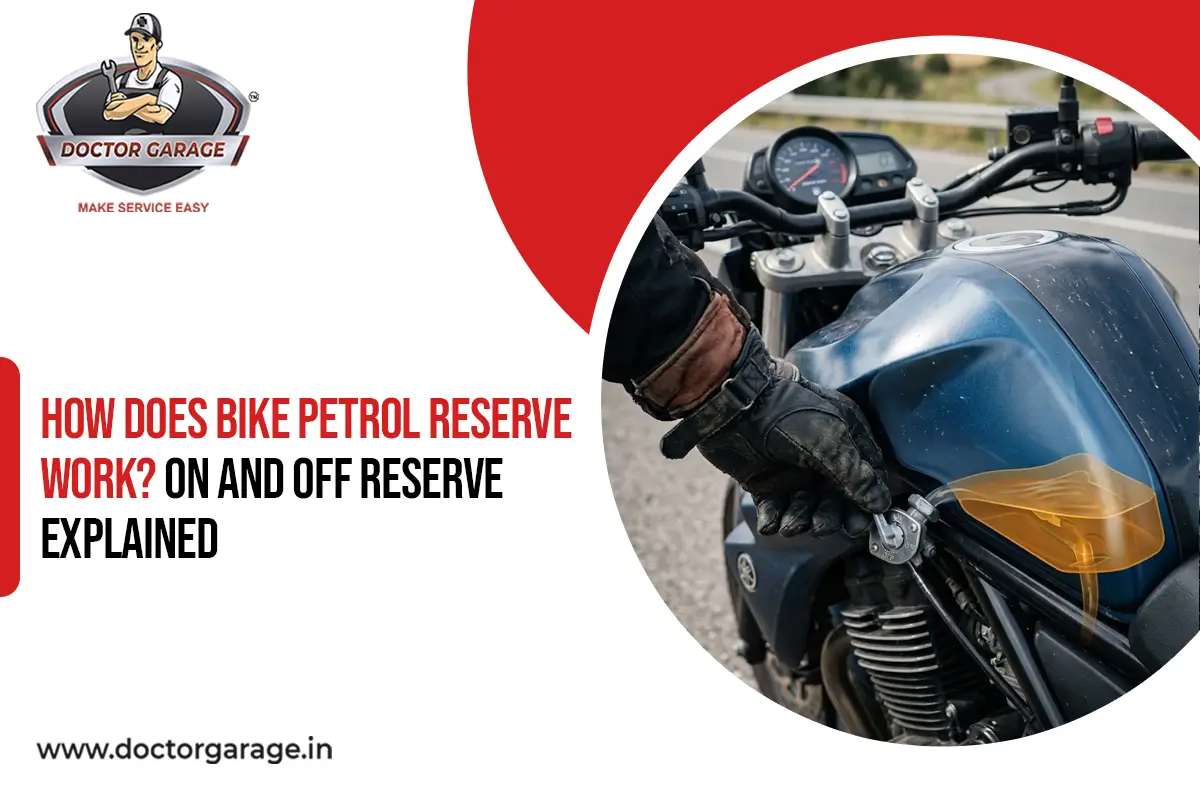
The bike petrol reserve is a lifesaver for bike riders on low fuel levels. Known as the two-wheeler reserve switch or bike reserve, it allows riders to access the reserved fuel when the main tank is empty. Many riders are confused between ‘On’, ‘Off’ and ‘Reserve’. In this blog, we discuss what petrol reserve in bike is and how it works to ensure a smooth and safe riding experience.
What is Bike Petrol Reserve?
The bike petrol reserve system is a backup supply in the two-wheeler’s main tank. It allows riders to use a small portion of fuel (10-15% of tank capacity) when the main fuel is empty. This system is controlled by the motorcycle reserve switch tha hold 1 to 2 litres of fuel, so in case you run out of petrol, you can use reserve fuel and reach the nearest petrol station. The bike petrol reserve is not a separate tank but in the lower section of the main tank.
How Does Bike Petrol Reserve Work?
The motorcycle reserve is a three-valve system found on the left side of the bike under the fuel tank, near the carburettor. The bike reserve switch has three positions: ‘On’, ‘Off’, and ‘RES’.
- On: The ‘On’ position, fuel flows from the main tank to the engine. This is used for everyday riding for a smooth supply of fuel when the tank has sufficient fuel.
- Off: The ‘Off’ position stops the fuel from the tank from flowing to the engine. This feature is used when parking a bike for a long time and preventing fuel leakage.
- ‘RES’: This position enables reserve fuel to flow to the engine when your bike runs out of fuel in the main tank.
The fuel reserve feature comes in older carburettor bikes.
How to Use Petrol Reserve Feature?
Using the reserve feature in a bike is quite simple. Start your bike and keep the switch ‘On’, which uses the fuel from the main tank. If your bike stops suddenly due to low fuel, turn the switch to ‘RES’ and use the reserve fuel. In case you are parking your bike for a long period, remember to switch to ‘Off’ to prevent fuel leakage.
Advantages of Bike Petrol Reserve
When you are stranded on the road, the petrol reserve feature is a lifesaver. It provides the following benefits.
- Cleans the Tank: When your runs on reserve, the dirt and debris at the bottom of the tank are cleared out.
- Urgent Backup: The reserve fuel ensures you are not stranded and can get to the nearest fuel station for a refill.
Also check: Bike Maintenance Tips for Every Season
Disadvantages of Running Bike on Reserve
- Risk of Running Out of Fuel: Using reserve fuel continuously makes it difficult to keep track of fuel levels and increases the risk of running out of fuel.
- Load on Fuel Systems: Motorcycles operating on fuel pumps; frequent use of the reserve system can overload the pump, which could eventually lead to costly repairs and reduced service life.
Conclution
The bike petrol reserve switch is a safety feature that should be used in case of emergencies, as relying on it as a main source of fuel is not an ideal situation. If you are experiencing issues with your bike and are looking for a two-wheeler servicing in India, Doctor Garage offers top-notch services with multi brand bike service center franchise partners across India. Visit the nearest Doctor Garage bike service centre for a smooth and safe ride!
Frequently Asked Questions (FAQ)
Bike petrol reserve is a backup fuel supply stored in the lower section of the fuel tank that allows riders to travel a short distance after the main fuel level is exhausted.
The reserve switch controls fuel flow through three positions: On, Off, and Reserve. The On position uses the main fuel supply, Off stops fuel flow, and Reserve accesses the backup fuel.
The On position allows fuel from the main tank section to flow to the engine during normal riding conditions.
The Off position stops fuel flow from the tank to the engine and is commonly used when the motorcycle is parked for extended periods.
The Reserve position allows access to the remaining backup fuel when the main fuel level becomes too low for normal operation.
No. Reserve fuel is designed for emergencies only. Riding continuously on reserve can make it difficult to monitor fuel levels and increase the risk of running out of fuel.
Most motorcycles provide approximately 1 to 2 liters of reserve fuel, although the exact amount varies by model.